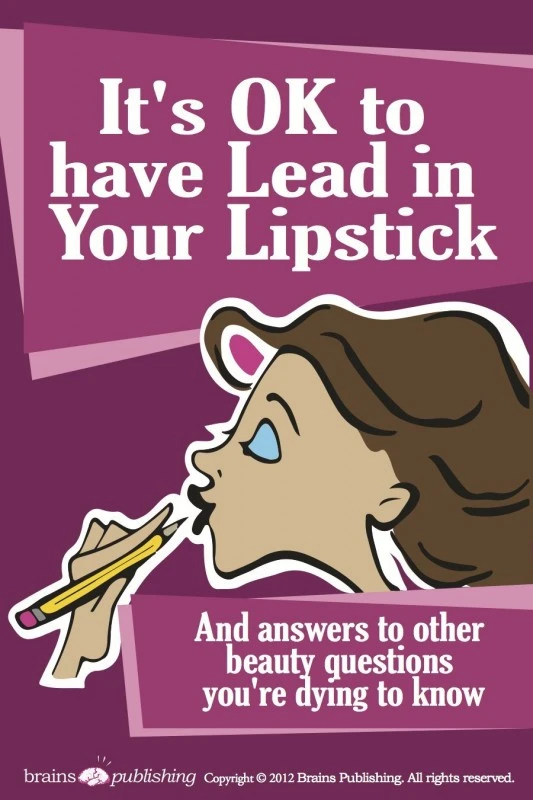
A few months ago I came across The Beauty Brains blog. I can’t even remember how I found it, but I was instantly hooked. I’m obviously a big fan of cosmetics, and I am also a big fan of science-based facts over advertising hype or naturalistic fearmongering, so it was nice to find a blog that covered topics like how effective new ingredients were, how dangerous certain chemicals really are, and other questions I had about cosmetics safety and efficiency. After reading the blog for a while I figured I might as well support what they were doing by purchasing their book, It’s OK to Have Lead in Your Lipstick. That link will take you to the Nook version, which is what I have, but you can also get it for your Kindle or in other digital formats, or as an actual physical book.
I was hoping for something more in-depth than the blog, but the book proved to be mainly a collection of previous blog posts, and maybe some new information formatted in the same style. Of course, I haven’t read through the entire archives so it was mostly new information to me, but I would have preferred it to be less breezy and more meaty, you know? That said, it was still fun and informative and I enjoyed reading it over the past three days.
One thing that I like about The Beauty Brains is that in addition to answering questions about specific products and ingredients, they give you the tools to be a smart consumer of cosmetics. They teach you about the “weasel words” that companies use to make it sound like their product is awesome without actually promising anything, how to tell which ingredients are the active ones in a product and which are “pixie dust” added to make it seem fancier or more natural, and what ingredients you should look for or avoid in various types of products. They also examine a lot of new (as of 2012ish for the book, and current in the blog) advances in the cosmetics industry and let you know which ones seem promising and which ones probably won’t amount to much.
The book and the blog both mainly seem to cover things like moisturizers, anti-aging creams and hair care products as those are the areas where companies seem to make the most outrageous claims about reversing aging and damage, but they do talk about things like 3-free nail polish, coloring agents in lipstick and how the FDA regulates cosmetics in general, which is of interest to the makeup fanatic.
And for entertainment’s sake, there’s even a chapter about insane beauty trends with weird ingredients, like the bird poop facial (ew?).
Over all, I’d say the book is entertaining and informative enough to be worth spending the few bucks to get the eBook version, but not the $15ish for the physical copy.